Dreaming about more elbow room, a small orchard, or space for animals in Fallbrook? Buying acreage here is exciting, but it is not the same as buying a suburban home. Parcels vary widely in terrain, utilities, water, and permitted uses. In this guide, you will learn how to evaluate the essentials before you tour so you can move forward with confidence. Let’s dive in.
What acreage means in Fallbrook
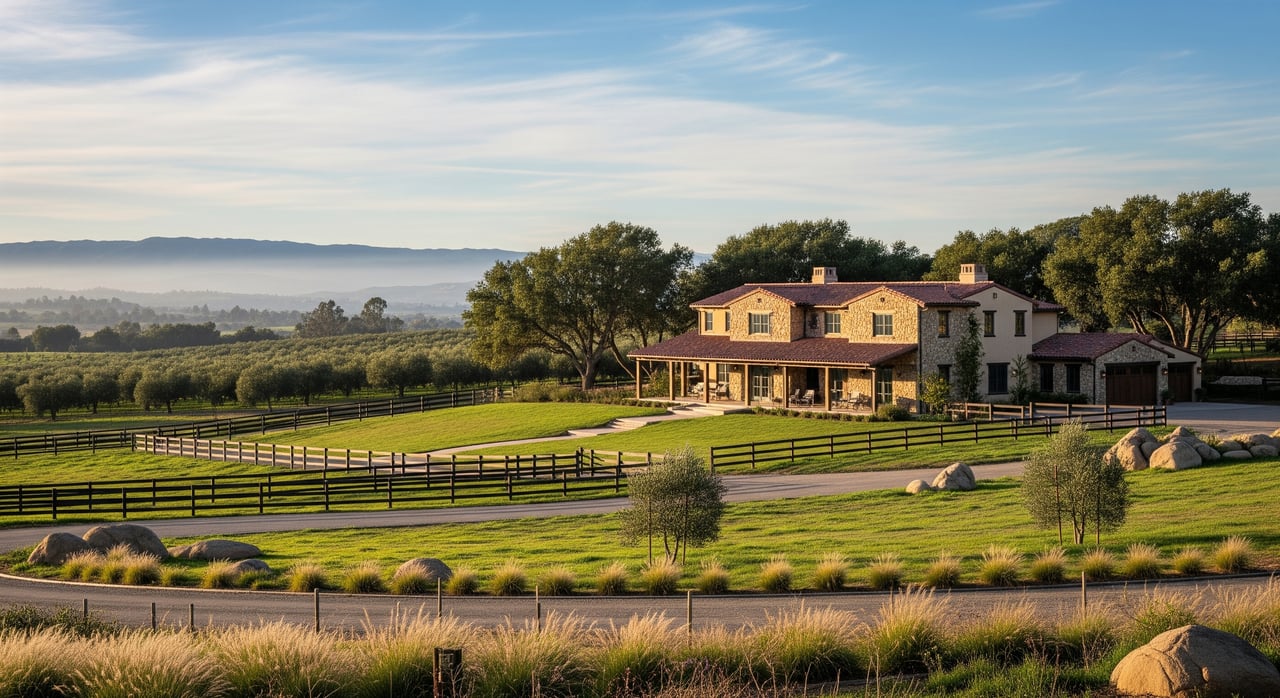
Fallbrook sits in unincorporated North County San Diego. You will find rolling hills, avocado and citrus groves, and mixed residential-ag use. Parcels range from small ranchettes to larger agricultural holdings. Infrastructure and services vary by property, so you need to confirm the basics for each site.
Because Fallbrook is unincorporated, county agencies set most rules. Planning, zoning, permits, septic and well oversight, and grading all run through San Diego County departments. Local water districts and the utility company also play key roles.
Common property types include homes with existing orchards, hobby farms with outbuildings, vacant hillside lots, and larger commercial ag parcels. Each type brings a different checklist for water, septic, access, and overall feasibility.
First steps before you tour
Before you drive out, ask the seller or listing agent for a pre-tour packet. Request:
- Recent survey or parcel map and a topographic map
- Recorded deed plus any access easements, rights of way, or CC&Rs
- County parcel map and any buildable area or slope overlays
- Recent property tax bill and any HOA or road association documents
- Well completion report and recent water test results, if a well exists
- Septic as-built plans, permits, and pump or inspection records
- Recent water and electric bills to estimate ongoing costs
- Any past building, grading, or agricultural permits
Also clarify your intended use. A home with light gardening needs less water and infrastructure than a home with a producing orchard or livestock. Your plans will shape every part of due diligence.
Finally, identify the key agencies and providers for this parcel. In Fallbrook, you will commonly work with San Diego County Planning and Development Services, the County Department of Environmental Health for septic and wells, local water districts, San Diego Gas & Electric, and CAL FIRE for wildfire guidance.
Terrain and access
Topography drives buildability and cost. Steep slopes limit where you can place a home, septic system, and barns. Slopes can also add grading, erosion control, and retaining wall costs.
Confirm road access. Is the route a public county road, or a private road or easement across neighboring parcels? If private, ask for the recorded road maintenance agreement and who pays what. Review driveway conditions and whether the site supports emergency access turnouts and gate setbacks.
Check practical access too. Measure drive time to groceries, medical services, and fire stations. Terrain and road conditions affect daily life and emergency response.
What to ask for
- Recorded easements and any road agreements
- Vicinity and topo maps to understand slope and access
- County parcel map and any hillside development standards relevant to the lot
Water: the make-or-break factor
In Fallbrook, water often decides whether a property fits your plan.
Common setups include public water through a local district or a private well. Some agricultural uses may require higher flow and can combine district water, wells, and trucked water. Drought rules and allocations can also affect irrigation.
Your must-do checks:
- Verify the water provider and meter availability. Ask about capacity, impact fees, and the cost to extend service if no line exists at the property.
- For a well, request the well completion report, pump details, depth, production rate in gallons per minute, and a recent water quality test. A basic panel should include bacteriological tests, nitrates, and salinity.
- If you plan to irrigate orchards or pastures, review historic water usage, available allocations, and any drought restrictions.
- Confirm any local groundwater constraints or basin rules.
Water quality and volume are central for hobby agriculture. Drilling a new well or hauling water can be costly. Connecting to a district can also involve large fees, so get numbers early.
Septic and wastewater
Most acreage properties in Fallbrook use private septic systems. Municipal sewer is limited.
Ask for septic permits, as-built plans, the system’s design flow, and the most recent pump or inspection records. If the system is older or unknown, plan for a perc or soils evaluation and a design check with the County Department of Environmental Health. Identify feasible leach field areas with proper setbacks from property lines and water bodies. Steep slopes, high groundwater, or rocky soils can limit options and increase costs.
The size and health of the septic system can affect how many bedrooms you can support and where you can place additions or an ADU.
Power and connectivity
San Diego Gas & Electric serves the area. Some parcels are close to existing lines. Others need a line extension, which can be expensive depending on distance and terrain. For higher loads like irrigation pumps or large shops, verify transformer capacity.
Many rural homes use propane or all-electric systems. Natural gas is typically not available.
Internet can be limited in rural pockets. Options may include DSL where offered, fixed wireless from local ISPs, or satellite. If internet speed is critical for work, test options before you commit. Also confirm trash service availability and where you receive mail.
Zoning and permitted uses
Zoning and the County general plan set what you can build and operate. Review permitted uses for residential, agricultural, equestrian, and small-scale commercial activities. Check setbacks, minimum lot sizes, and animal limits. Confirm whether the parcel is in an agricultural preserve or affected by recorded CC&Rs or conservation easements.
ADU rules are broad at the state level, but septic capacity, placement, and County procedures will drive what is feasible. If an ADU is part of your plan, verify early.
Environmental, wildfire, and flood
Fallbrook’s hills and chaparral increase wildfire exposure. Plan for defensible space, fuel reduction, and ongoing vegetation management. CAL FIRE and County guidance can help you design safe access and maintain clearance.
Vegetation and habitat protection may limit tree removal and grading in certain areas, especially around oak woodlands. Creeks and drainages can trigger state or federal rules, which may limit how much acreage is usable.
Check FEMA flood maps for floodplain status. Even if a property is not in a mapped flood zone, steep ground can collect seasonal water and create erosion. For former ag sites, ask about historical pesticide use and any past fuel storage that could affect soils.
Budgeting: one-time and ongoing costs
Costs vary a lot by site. Use these categories and ranges as a planning framework, then validate with local providers.
One-time costs to plan for:
- Title, escrow, inspections, and survey
- Well drilling and equipment, which can range from the low five figures to well above $20,000 depending on depth and geology
- Septic installation, which can start in the low five figures and exceed $30,000 to $50,000 for complex or engineered systems
- Power line extension, which can be tens of thousands of dollars if the parcel is far from service
- Driveway and drainage work, often $5,000 to $50,000 depending on length and surfacing
- Fencing, which scales quickly on larger perimeters
- Grading, erosion control, and retaining structures on hillside sites
- Permits and impact fees for building, septic, water, and grading
Recurring costs to expect:
- Property taxes around 1 percent of assessed value in California, plus local assessments that can bring the effective rate to roughly 1 to 1.5 percent
- Insurance, which can be higher in wildfire zones. Some owners use the California FAIR Plan as a last resort with higher cost and more limited coverage
- Utilities, including electricity, water service and irrigation, propane refills, and garbage service
- Private road assessments, plus fence and gate maintenance
- Fuel and maintenance for tractors, mowers, and irrigation pumps
- Ongoing vegetation management and defensible space work
Pro tip: obtain insurance quotes and written estimates for water, septic, and utility extensions before you bid. These numbers can materially change your budget and timeline.
What to look for on the property tour
Bring a simple checklist:
- Access: Road condition, width, turnouts, gates, and grade
- Terrain: Flat or gently sloped pads for home, barns, and leach fields
- Water: Location of meter or well head, pressure tanks, irrigation equipment
- Septic: Cleanouts, tank location, leach field signs, and setbacks
- Power and communications: Nearby poles or transformers, service panels, and realistic broadband options
- Fire safety: Clearances, fuel breaks, roof and siding materials, and proximity to heavy fuels
- Usable area: Pasture or orchard zones, soil depth, and wind exposure
- Drainage: Erosion channels, culverts, and evidence of seasonal flows
Take notes and photos. Treat your first impressions as a starting point, then confirm with records and professionals.
Your due diligence team
Bring in the right help early:
- Local real estate agent with acreage and agricultural experience
- Title company familiar with rural easements
- Civil or site engineer for grading, drainage, and road evaluation
- Geotechnical engineer for steep or suspect slopes
- Licensed well driller and a water quality lab
- Septic designer or installer, plus a County environmental health contact
- Agricultural consultant or UC Cooperative Extension advisor for crop and irrigation planning
- Fire protection consultant or CAL FIRE contact for defensible space and access guidance
- Surveyor if boundaries or access are in question
- Land-use attorney for complex easements or conservation questions
- Insurance broker with rural and wildfire expertise
Common red flags
Watch for these early warnings:
- No legal, recorded access and reliance on informal driveways
- Unknown or non-permitted well or septic systems
- No water service and very low well yields or poor water quality
- Costly or unclear easement obligations for road or utility access
- Properties in high-hazard wildfire zones with poor access and no recent defensible space work
- Conservation easements or CC&Rs that conflict with your planned agricultural use
- Steep slopes without geotechnical review that may limit building or septic
Action plan and timeline
- Define your intended use, budget, and water needs.
- Get preapproved and set a realistic development budget for utilities and site work.
- Request the pre-tour document packet from the seller.
- Call the water district, SDG&E, and County contacts to confirm basics.
- Tour the site with your checklist and take photos.
- Order inspections and evaluations for well, septic, slope, and access.
- Obtain insurance quotes, especially for wildfire coverage.
- Write offers with clear contingencies tied to water, septic, access, and utility feasibility.
Work with a local guide
If you want space, privacy, or hobby agriculture in Fallbrook, a smart plan starts with the right team. You get better outcomes when a local agent coordinates documents, pulls in the right pros, and keeps your budget grounded in real numbers. With 24-plus years in North County and a track record across complex transactions, Kevin can help you focus on the parcels that fit your goals, then navigate the details that make or break acreage deals.
Ready to walk the right properties and build your plan? Reach out to Kevin Laurent to talk through your goals and get a tailored next step.
FAQs
What does buying acreage in Fallbrook typically involve?
- You will evaluate terrain, access, water source, septic, power, and zoning on a parcel-by-parcel basis because services and constraints vary widely across Fallbrook.
How do you verify water on a Fallbrook property?
- Confirm the water provider and meter availability, or review well logs, pump details, production rate, and a recent water quality test. For irrigation, check allocations and any drought restrictions.
Are ADUs allowed on rural parcels in Fallbrook?
- California allows ADUs broadly, but County rules and septic capacity can limit placement and size. Verify zoning, setbacks, and septic design flow before you plan an ADU.
What should you know about wildfire risk near Fallbrook?
- Many areas face higher wildfire exposure. Plan for defensible space, access that supports emergency vehicles, and get insurance quotes early since premiums and availability can vary.
How much does a new septic system cost locally?
- Simple systems can start in the low five figures, while engineered systems for challenging soils or slopes can exceed $30,000 to $50,000.
Who maintains private roads serving acreage parcels?
- Maintenance is usually set by recorded road agreements or associations that share costs among owners. Always review the recorded documents and ask about recent assessments.
What documents should you request before touring acreage?
- Ask for surveys or parcel maps, topo maps, recorded easements and CC&Rs, tax bills, well and water tests, septic records, utility bills, and any past permits.
What ongoing costs should hobby farmers expect in Fallbrook?
- Plan for water and irrigation charges, electricity, propane, property taxes, insurance, private road fees, equipment fuel and maintenance, and periodic vegetation management.
How do you confirm if you can build a barn or keep animals?
- Check County zoning and permitted uses, setbacks, animal limits, and any CC&Rs or conservation easements. Septic location and capacity can also influence placement.